

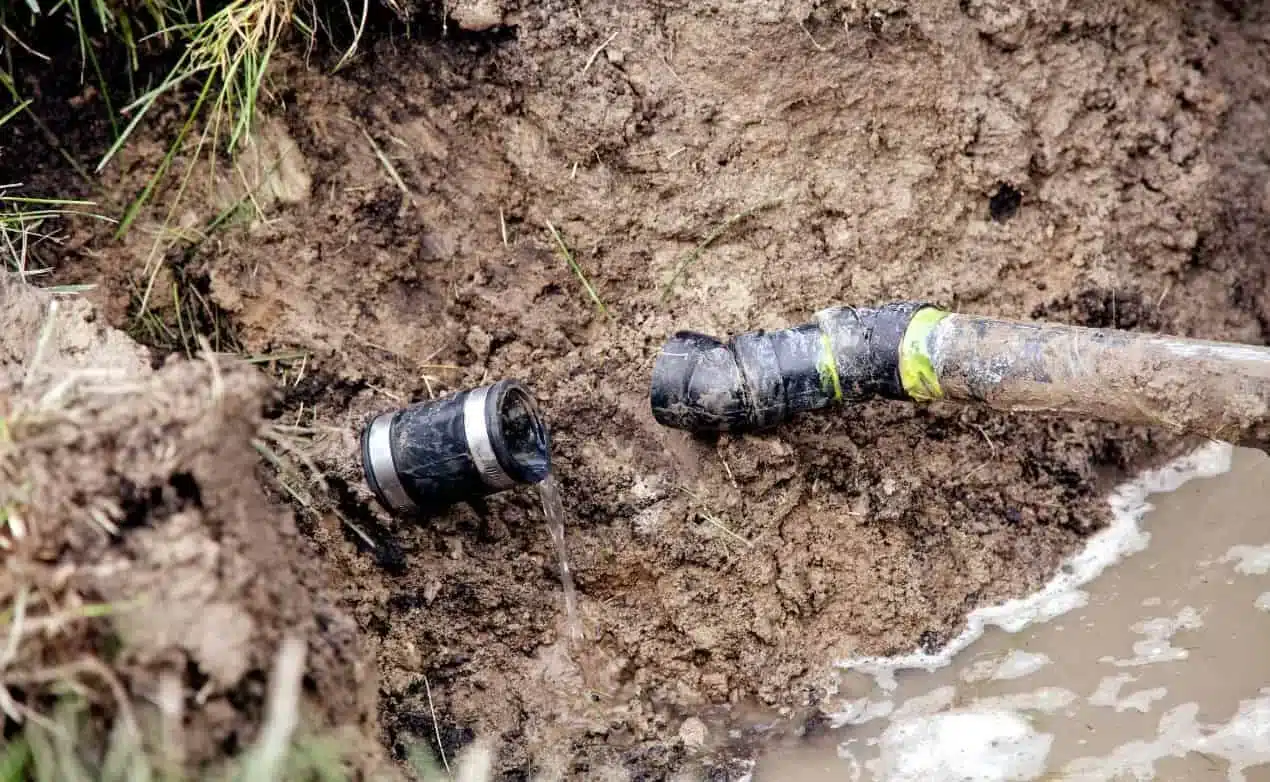
Many of the problems in sewer systems can be linked to pipes and joints that are offset. When joints shift or sink, they lose their alignment with the rest of the sewer piping and drainage problems result. In this article, you’ll learn the different causes, problems, and remedies of sewer line offsets. Use this information to take the appropriate steps to prevent this problem, or to get the necessary help from your local plumbers in Sacramento.
Sewer Line Offset Causes
Tree Roots. The roots of trees have the capacity to grow through, under and above the sewer lines on your property. When this happens, a sewer pipe joint may become offset when the roots expand and move the joint out of position. The sewer line offset repair experts at Clarke & Rush caution that different types of pipes have varying levels of susceptibility to tree roots. For example, clay pipes are especially vulnerable to tree roots.
Soil Movement. When the soil around the sewer pipes shifts or settles, it creates the possibility that offsets will be created. Once again, this result is more likely in clay pipes while cast iron sewer pipes stick together and form some kind of belly at the point where the ground has moved.
Problems Resulting from Offset Sewer Line Joints
Clogs. When offsets develop, a bottleneck is created at that point in the sewer system. As fluids and solids flow through the system, they slow down at the point of the offset. Over time, some solids will be stuck there and trap more materials until a big clog develops in the sewer pipe. Plumbing tools, such as snakes, can also snag at the offsets, thereby making it more costly and complicated to fix the existing clog.
Openings for tree roots. When offset joints and gaps develop in the sewer system, an opportunity is given to tree roots to penetrate the pipes. It all starts with roots following the moisture available to its source, and before long, the roots will penetrate the pipe and grow large inside that pipe. Clogs become a common problem and you may need the help of Sacramento plumbing professionals with advanced tools to cut out the offending roots.
Sinkholes. The gaps in the pipes and offset joints allow sewage to leak out of the pipes. This sewage not only contaminates groundwater but also carries soil with it as it flows. Over time, sinkholes will develop on your property in the areas where this underground sewage is flowing.
How to Diagnose Joint Offsets
Camera inspections. One of the best and most cost-effective ways to detect sewer pipe offsets is by asking your local plumber in Sacramento to perform a camera inspection of the sewer system. The inspection will reveal the precise location of the offset, as well as any other defects within the sewer system of your home.
Analyzing the debris during clog removal. You can also tell that there is an offset in the piping system by analyzing the debris pulled out during repairs, such as when clogs are being removed. If the plumbing equipment pulls out larger roots or mud, chances are there is an offset in the system.
Repairing Offset Sewer Line
Traditional repair methods. One of the options available entails excavating the affected section of piping and then repairing or replacing it with a new pipe section. This process is very invasive because a large section of your yard has to be dug up regardless of how priceless you think your landscaping is. The cost of this kind of repair may also be high, since the sewer line offset repair technician has to cover the cost of digging up, and later burying the pipe section being repaired or replaced.
Trenchless pipe repair. Alternatively, the Sacramento plumber may elect to use a trenchless pipe repair method if the section to be fixed is relatively long. Pipe bursting is an example of trenchless sewer repair. In this method, a small access hole is excavated to insert the plumbing equipment, after which the existing pipe is torn up while a new one is simultaneously installed in its place. This option is less disruptive since the entire pipe section doesn’t have to be dug out of the ground. Pipelining can also work to fix damage to offset or aging sewer pipes.
Many times, homeowners learn that sewer line offsets exist after suffering a lot of inconveniences due to clogs and sewage floods. You don’t have to go through the same. Work with the expert Sacramento plumbers from Clarke & Rush so that the sewer system is maintained properly. Any problems will be detected early and fixed so that the system isn’t disrupted. It all starts with a service contract with Clarke & Rush, so get one today.
