
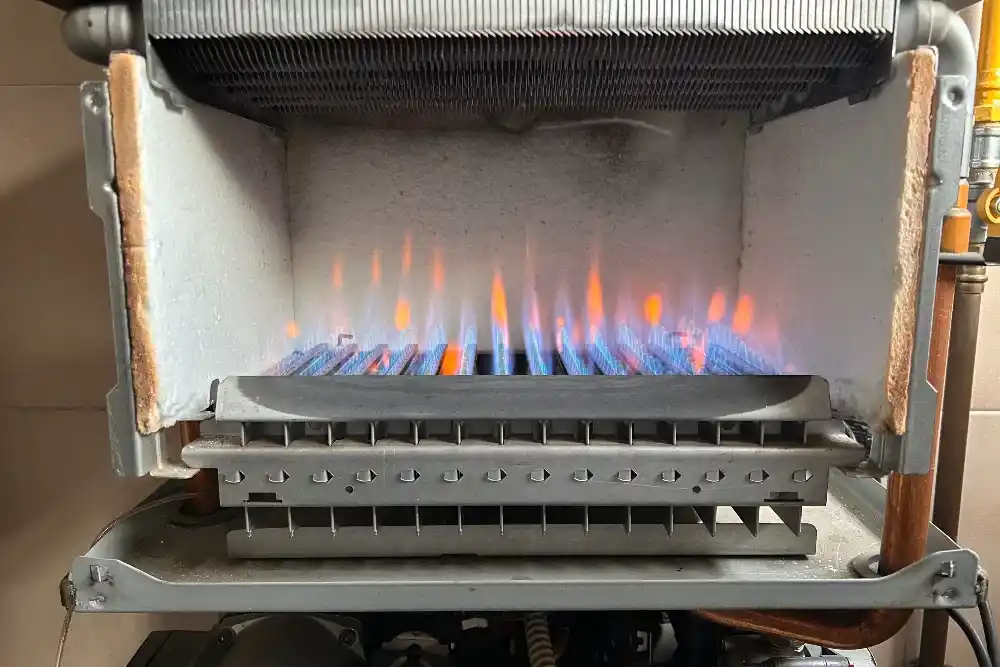
Quick Answer: A soft hum, a click before ignition, or light popping from the ductwork is normal furnace behavior. A bang, squeal, rattle, or repeated click that wasn’t there before points to a specific mechanical or ignition problem, and the noise itself is a useful clue. Banging usually means delayed ignition. Squealing points to the blower motor. Rattling is often loose panels or ductwork, though not always. Clicking with no heat usually means the flame sensor or igniter. None of these tell you exactly what’s broken on their own, which is why an HVAC technician still needs to inspect the system.
Your furnace does not need to run silently. What matters is whether the sound is new.
For Sacramento homeowners, this shows up on a predictable schedule. The furnace sits mostly idle from spring through much of the fall, then runs through a stretch of cold mornings once the cold weather arrives. A part that was already loose or worn by the end of last heating season doesn’t improve over a quiet summer, so the first week of daily use each fall or early winter is often when it finally announces itself. That’s usually when the calls start.
This guide breaks down what each noise typically means. For guidance on when a furnace problem is serious enough to shut the system down entirely, including gas smells and carbon monoxide alarms, see When Should You Turn Off Your Furnace? 7 Warning Signs. This guide focuses specifically on the noises themselves and what they’re telling you.
Does Every Furnace Noise Mean Something Is Wrong?
No. A furnace naturally makes some noise as it starts, heats the home, and shuts down.
A brief click before ignition is part of a normal startup sequence. A low, steady hum from the blower is normal too. Ductwork can make a light popping or pinging sound as the metal expands and contracts with temperature changes, which has nothing to do with the furnace itself.
Trane lists humming, a click before ignition, and mild duct popping among the sounds that occur during normal furnace operation.
The distinction that matters isn’t loud versus quiet. It’s changed versus unchanged. If your furnace sounds noticeably different than it did last winter, something has shifted mechanically, even if you can’t tell what yet.
Furnace Noise Quick Reference
| Noise | Most Likely Cause | Urgency | Safe to Investigate Yourself? |
| Bang or boom at startup | Delayed ignition | Schedule service soon | No |
| High-pitched squeal | Blower motor or bearing wear | Schedule service soon | No |
| Rattle during operation | Loose panel or duct connection | Check panels, then call if it continues | Limited (check visible screws only) |
| Repeated clicking, no heat | Flame sensor or igniter | Schedule service soon | No |
| Whistling | Dirty filter or blocked vent | Check filter first | Yes, filter and vents only |
| Buzzing | Electrical component (motor, transformer, capacitor) | Schedule service soon | No |
| Grinding or scraping | Blower assembly or motor wear | Shut off and call promptly | No |
Think of this table the way a mechanic treats an engine knock: it narrows down where to start listening, not a verdict on what’s broken. Several different problems can produce a similar sound, which is exactly why an HVAC technician tests the system instead of guessing from a description.
What Does a Banging Furnace Noise Mean?
A loud bang from a gas furnace is usually delayed ignition. Gas builds up for a moment before it catches, and when it finally ignites, it ignites all at once instead of smoothly. That small, contained explosion puts stress on the heat exchanger every time it happens, and it gets worse with repetition rather than better on its own. A loud ignition sound can be linked to delayed ignition and should be checked by an HVAC professional.
This isn’t a DIY repair. Ignition involves the fuel and combustion side of the furnace, and a qualified technician needs to determine why the delay is happening before the exchanger experiences more damage.
Not every bang originates at the furnace. Ductwork can make a similar popping or banging sound as it heats and expands. The timing helps narrow it down: a bang right as the burners fire points to ignition, while a bang a minute or two into the cycle is more likely the ducts.
If the noise comes from the furnace during ignition, don’t wait. Schedule a furnace repair with Clarke & Rush.
Why Is My Furnace Squealing?
A high-pitched squeal usually points to the blower assembly or motor. It tends to start when the blower kicks on and continues as long as air is being circulated throughout the house.
The Carrier website lists squealing among the noises that can indicate motor or mechanical problems. Trane documentation also connects high-pitched furnace noises with possible blower motor issues as well.
Worn bearings are a common cause on furnaces that have been in service for several years. A belt on older blower assemblies can also squeal as it wears. The fix depends on which one it is, and running a failing motor to the end usually turns a bearing replacement into a full motor replacement, which costs considerably more.
Don’t assume a specific part needs replacing just because the furnace squeals. An HVAC tech. can identify the actual source before recommending a repair, which prevents paying for a part that wasn’t the problem.
What Does a Rattling Furnace Mean?
Rattling is often the least serious of these sounds, but it’s still worth checking.
A loose panel, duct connection, or screw can vibrate against the cabinet as the blower runs. Rattling is frequently related to loose ductwork connections or panels, and tightening a few accessible screws sometimes resolves it.
Not all rattling is cosmetic. A metallic rattle that changes pitch with blower speed, rather than a simple loose-panel buzz, can point to something inside the cabinet, including a blower wheel out of balance or, in less common cases, a heat exchanger that’s beginning to crack as it expands with heat. That distinction is hard to make by ear alone.
Check visible, accessible panels for loose screws. Avoid opening the furnace further or reaching into the blower compartment. Electrical, mechanical, and gas components sit close together behind those panels, and an HVAC technician needs to inspect the source directly if tightening the obvious spots doesn’t resolve it.
Why Does My Furnace Keep Clicking?
A single click during startup is normal. Repeated clicking that doesn’t lead to heat is not.
This pattern usually means the furnace is trying to light, failing, and trying again. Trane notes that clicking can originate from a control board, electrical connection, safety switch, thermostat, or another system part.
One of the most common causes is a flame sensor that has oxidized. The sensor is a thin metal rod that sits in the flame path and confirms combustion is actually happening. Once it’s coated enough to stop sensing properly, the control board shuts the gas valve as a safety measure, the furnace tries again, fails again, and eventually locks out. This is usually an inexpensive fix.
Note when the clicking happens: before startup, during operation, or at shutdown. That detail speeds up the diagnosis and can save a return trip.
If clicking is paired with no heat, repeated failed starts, or short cycling, schedule a heating service visit rather than waiting for the pattern to resolve itself.
What Does a Whistling Furnace Mean?
Whistling almost always points to airflow rather than combustion. Air forcing its way through a restricted opening creates the sound.
Checking the filter when a furnace whistles is the first step. Gaps in ductwork can contribute to the same sound. If the filter is dirty, replace it. Confirm that supply and return vents aren’t blocked by furniture, rugs, or closed doors, since closing off rooms raises pressure elsewhere in the duct system and can produce the same whistle.
If the whistle continues after a fresh filter and open vents, the source is likely inside the furnace or duct system itself, and that’s a job for an HVAC company.
What Does Buzzing Mean?
A furnace’s normal operating sound is a low hum. A persistent buzz is different and usually electrical or mechanical in origin.
Lennox and Trane both list several electrical and blower-related causes of noticeable furnace buzzing, including the blower motor, a transformer, a capacitor, or loose wiring vibrating against the cabinet.
Electrical components aren’t a reasonable DIY project. If the buzz is new, loud, or continuous, schedule an HVAC inspection. If it’s paired with an electrical or burning smell, turn the furnace off at the breaker and call immediately.
What About Grinding or Scraping Sounds?
Grinding and scraping are the sounds worth taking most seriously among the mechanical noises on this list. They typically mean moving parts are rubbing, worn, or no longer sitting where they should.
The blower assembly is the most common source. Motor wear or direct contact between components that shouldn’t be touching both produce this kind of rough mechanical sound.
Continuing to run a furnace that’s grinding or scraping loudly tends to turn a repairable problem into a replacement. Shut the furnace down and contact an HVAC company for diagnosis rather than letting it run. Don’t reach into the blower compartment or attempt to move any parts by hand. This is definitely not a DIY issue.
Can Furnace Noise Actually Come From the Ductwork?
Yes, and this is one of the more common sources of confusion when troubleshooting by ear.
Sheet-metal ductwork expands as warm air moves through it, which can create a brief pop or ping right after the furnace starts. Loose duct connections can rattle in the same way a loose furnace panel does. A whistle can develop where air escapes through a gap or squeezes through a restricted section.
A noise you hear near the furnace cabinet may actually be originating several feet away, farther along the duct run. This is one reason a technician often needs to inspect both the furnace and the accessible ductwork together rather than assuming the furnace itself is the source.
What If a Furnace Noise Comes With Poor Heating?
Noise becomes a much more useful diagnostic clue when it shows up alongside another symptom. A squeal paired with weaker airflow from the vents, repeated clicking paired with no heat, or rattling paired with the system starting and stopping all narrow down the possibilities better than the noise alone.
Make a note of what you hear and what the furnace is doing at the same time, including how long into the cycle the noise starts. You don’t need to identify the failing part yourself. Describing the pattern accurately gives the technician a head start before they arrive.
When a Furnace Noise Signals a Safety Issue
Most of the noises above call for scheduled service, not an emergency shutdown. A few situations are different.
A strong gas odor, a sounding carbon monoxide alarm, or a burning smell that doesn’t fade after the first hour of the season all call for shutting the furnace down immediately rather than waiting to see if the noise continues. Our guide on furnace warning signs and when to shut it down covers exactly how to recognize these situations and what to do in each one, including how to physically shut off the furnace at the switch, breaker, or gas valve.
If you’re dealing with an unusual noise and nothing else feels urgent, the sections above will help you figure out what’s likely happening. If a noise shows up along with a gas smell, an alarm, or a smell that won’t clear, treat that as the priority.
Can Regular Heating Service Help Prevent Furnace Noise?
Routine maintenance gives a technician the chance to catch developing problems before they turn into a noise you can’t ignore.
Loose parts, early bearing wear, dust buildup on the heat exchanger, and airflow restrictions often show up during a normal inspection well before they’re loud enough to notice during daily use.
Booking a heating service appointment before the first real cold snap, means catching a worn part while it’s still a minor fix instead of an emergency call during the first cold week of the season, when every technician in the region is already booked solid.
Maintenance won’t prevent every repair. It does give the system regular professional attention and gives you a chance to ask about a sound you’ve noticed before it gets worse.
Don’t Ignore a Furnace That Suddenly Sounds Different
You don’t need to react to every click or hum your furnace makes. Heating systems naturally produce some sound. What deserves attention is a change: a new bang, squeal, rattle, buzz, whistle, or repeated click that wasn’t part of the furnace’s normal operation before. Notice when it happens and whether heating performance has changed with it, then schedule service instead of guessing at the part from the sound alone.
A furnace that suddenly sounds different is telling you something specific, even if you can’t translate it yet. Clarke & Rush HVAC technicians hear these same sounds on service calls across Sacramento every fall, and can usually narrow down the cause within a few minutes of listening to the system run.
If your furnace has started banging, squealing, rattling, clicking, or making any other sound that wasn’t there before, contact Clarke & Rush to schedule furnace service. A technician can diagnose the noise and recommend the right repair before a small warning sign turns into a bigger heating problem.
People Also Ask
Is it normal for a furnace to make any noise at all? Yes. A working furnace typically produces a low hum from the blower, a brief click before ignition, and occasional light popping from the ductwork as metal expands with heat. None of these indicate a problem on their own. What’s worth paying attention to is a change from your furnace’s usual sound pattern, not the presence of sound itself.
What is the most dangerous furnace noise? No single noise is automatically the most dangerous, since several can point to serious problems depending on context. Grinding or scraping suggests active mechanical damage that gets worse the longer the system runs. A bang paired with a gas smell is more urgent still. Any noise paired with a gas odor or a sounding carbon monoxide alarm takes priority over the noise itself.
Can a dirty air filter really cause furnace noise? Yes. A clogged filter restricts airflow, which can produce whistling as air forces its way through a narrower path, and can cause the blower to strain and sound louder than usual. It’s one of the simplest things to rule out before assuming a mechanical failure, since checking or replacing a filter takes only a few minutes.
Should I turn my furnace off if it’s making noise? Not for most noises covered in this guide. Banging, squealing, rattling, clicking, and whistling generally call for scheduling service rather than an immediate shutdown. The exceptions are a gas smell, a sounding carbon monoxide alarm, or a burning smell that doesn’t fade, all of which call for shutting the system down right away.
Why does my furnace only make noise when it starts up? Startup is when components experience the most stress: the igniter fires, the blower motor spins up from a stop, and gas pressure changes rapidly. A noise that only occurs at startup, such as a bang from delayed ignition or a squeal from a motor working to overcome friction at rest, points to a cause tied specifically to that transition rather than to steady-state operation.
Does furnace noise get worse in older Sacramento homes? It can, though the home’s age matters less than the furnace’s age and duct condition. Older duct systems are more likely to have loosened connections or gaps that create popping or whistling. Furnaces that have been in service for many years accumulate more wear on bearings, motors, and ignition components, which increases the likelihood of the mechanical noises covered above.
How often should a furnace be inspected to catch noise problems early? An annual inspection, ideally in late summer or fall before regular heating season starts, is generally enough to catch developing issues like early bearing wear, loose connections, or a flame sensor beginning to oxidize. In the Sacramento area specifically, scheduling this before the first sustained cold stretch avoids competing for an appointment during the season’s busiest week.
Can ductwork noise be mistaken for furnace noise? Yes, often. Popping, rattling, and whistling can all originate in the ducts rather than the furnace cabinet itself, since expanding metal, loose connections, and airflow restrictions all produce similar sounds at a distance. A technician may need to check both the furnace and the accessible ductwork to confirm where a specific noise is actually coming from.
