
Sacramento Window Replacement Contractor Explains Window Efficiency Ratings
Did you know that according to the U.S. Department of Energy’s Advanced Research Projects Agency Energy, HVAC systems accounted for 14% of the United States’ total energy consumption in 2013. That is an immense amount of energy… and money!
Even more surprising, is the fact that heat gained/lost through glass windows, doors, and skylights accounts for about 25% of a residential home’s heating and air conditioning costs.
We all think of windows as a nice way to let some natural light or a breeze in, but in reality, they are thinly covered holes in your house, likely in need of replacing, that are costing you a ton of money on your utility bills!
Window Efficiency Labels
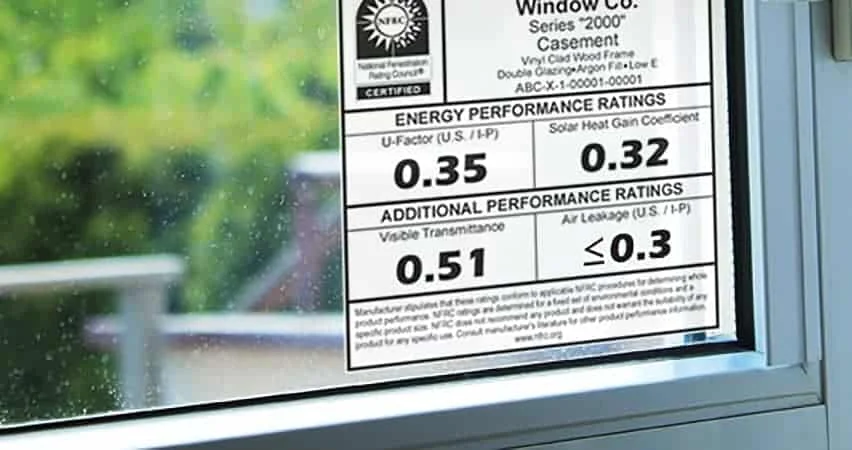
Generally, your window will be rated using a combination of two different labels if it qualifies for the Energy Star Program:
- National Fenestration Council (“NFRC”) Label – This is a non-profit organization that tests and documents the efficiency ratings of different home upgrade solutions, including windows
- Energy Star Label – This label will provide information on how well the product will improve a home’s efficiency, and whether it meets the Energy Star Programs guidelines
Ratings & Measurements
There are three key window efficiency measurements that need to be considered when purchasing new windows. They relate to the amount of light let in, the amount of heat transferred inside by the sun, and the amount of heat that escapes outside. The Energy Star Program does not include the light rating in their calculations, as it does not relate to energy gained or lost.
- U-Factor – Calculated on a scale between 0.15 and 1.20 – Describes how well a window works to prevent heat from escaping outside. A lower the number represents a more efficient window
- Solar Heat Gain Coefficient – Calculated on a scale of 0 to 1 – Describes the window’s ability to prevent solar heat from entering the home through the windows. The lower the number, the more heat transferred into the home from the sun
- Visual Transmittance – Calculated on a scale of 0 to 1 – Describes a window’s ability to let the visible light spectrum in. The higher the number, the more visible light let in into the room
What Does This Mean for Me?
If it still sounds like a confusing mess, don’t worry, there’s a lot to think about! The thing to remember about windows, is that everyone will want something different from them.
An individual living in Alaska will want a window with a very low U-Factor (to keep heat in the house), and a low solar heat gain coefficient (meaning the windows will help the sun heat the house as well)
An individual living in South Lake Tahoe, where the winters are cold but in the summer they may run an air conditioner, you would want a low U-Factor but a high solar heat gain coefficient to prevent the sun from overheating the house in the summer.
The visual transmittance rating is of less importance when it comes to HVAC efficiency, but can make a big difference in the brightness level of your home!
Thinking About Window Replacement in Sacramento?
The Sacramento window replacement contractor, Clarke & Rush, has been helping families make their homes more efficient since the government rolled out the Energy Star Program!!!
We can help you with everything from replacing windows, to replacing your entire HVAC system. We have the team, the tools and the knowledge of energy efficiency to make your home improvement dreams come true. Call our Sacramento window replacement contractor today!