
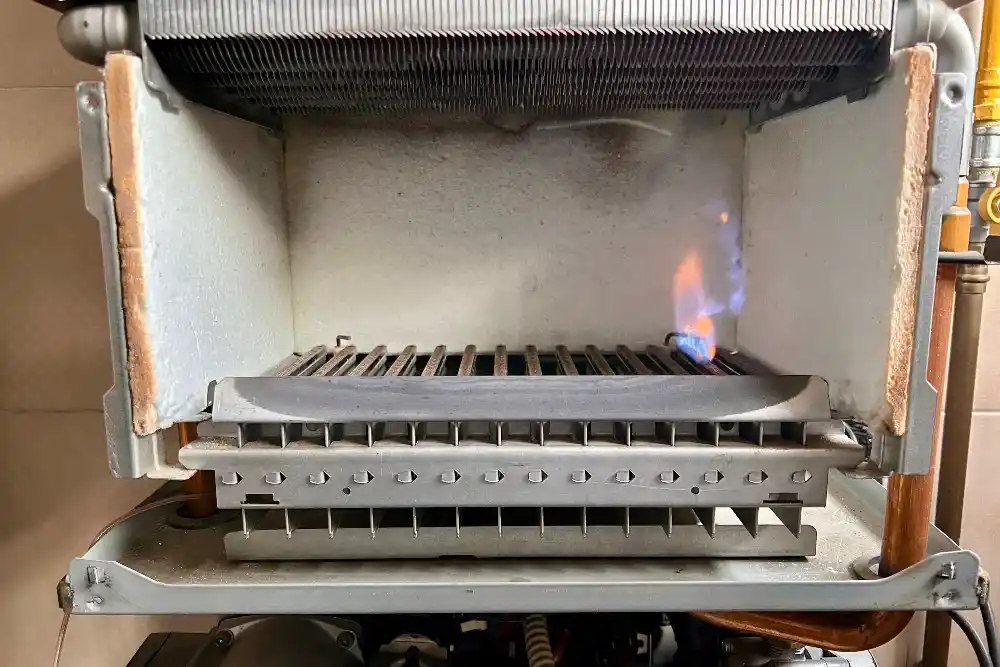
Quick Answer: Furnaces are supposed to produce heat, not water, so finding a puddle underneath yours is understandably unsettling. The good news is that a furnace leaking water usually points to something fixable in the drainage system rather than a failed furnace. Think of the puddle the way you’d think of a low-oil light on a dashboard: it tells you there’s a leak somewhere in the system, but it doesn’t tell you which hose cracked. A clogged drain line, a damaged pan, a failed condensate pump, and a cracked heat exchanger can all produce water in roughly the same spot, and only a closer look tells you which one you’re actually dealing with.
Some of these leaks are simple fixes. Others need more attention before water damages the furnace, the flooring, or nearby electrical components. Here’s what Sacramento homeowners should know about water coming from their furnace.
Where the Leak Shows Up vs. What It Usually Means
| Where You Notice Water | Likely Cause | How Urgent |
| Small wet patch that grows slowly near the base of the furnace | Clogged condensate drain line | Schedule service soon |
| Water pooling near the top of the furnace, close to the indoor AC coil | Cracked or damaged drain pan | Schedule service soon |
| Standing water and an overflow smell, on a system with a small pump box | Failed condensate pump | Schedule service soon |
| A drip that appears and disappears with each heating cycle | Loose or damaged drain tubing | Repairable, but don’t ignore it |
| Water tracking down the side of the cabinet, humidifier attached | Leaking whole-house humidifier | Schedule service soon |
| Leak appears only when the AC runs, not when heat is on | AC evaporator coil or drain pan | Schedule service soon |
| Leak paired with a burning smell, odd flame color, or a CO alarm | Cracked heat exchanger | Shut off and call now |
Treat this as a starting point for the conversation with a technician, not a self-diagnosis. Several of these causes can produce nearly identical puddles, which is exactly why the sections below go into more depth on each one.
Can a Furnace Produce Water Normally?
Yes, in some furnaces. High-efficiency condensing furnaces remove more heat from combustion gases before those gases leave the home, and as the gases cool, moisture forms inside the system. That moisture, called condensate, is supposed to travel through a drain. High-efficiency furnaces naturally produce condensate, but water collecting around the unit points to a drainage problem rather than normal operation.
Older or lower-efficiency furnaces work differently and typically shouldn’t produce condensate at all. If one of those units has water around it, the actual source may be the air conditioner, a humidifier, nearby plumbing, or another component installed close by rather than the furnace itself.
Common Causes of a Furnace Leaking Water
1. A Clogged Condensate Drain Line
A clogged condensate line is one of the first things an HVAC technician checks on a high-efficiency furnace, since dirt and debris can restrict the drain tube enough that water backs up instead of draining normally. A furnace condensate drain line clogged with buildup usually starts as a small wet patch near the unit before growing into a larger puddle if it’s left alone. HVAC manufacturers’ documentation cites clogged condensate drainage as a common cause of furnace water leaks, and some systems have safety controls that shut heating operation down entirely once the blockage gets bad enough.
2. A Cracked or Damaged Drain Pan
Drain pans catch condensate and direct it toward a drain, and in many homes, one is also tied to the indoor air-conditioning coil mounted near or above the furnace. If the pan cracks, rusts, or shifts out of position, water escapes instead of reaching the drain, which can make it look like the furnace itself is the source.
If you’re troubleshooting a furnace condensate drain pan issue, your HVAC technician will likely check the nearby indoor coil and its own drainage setup too, since manufacturer guidance shows that coils and certain furnace installations use primary, secondary, or auxiliary drain arrangements. A damaged pan needs to be repaired or replaced rather than just wiped up, or the leak will simply come back.
3. A Condensate Pump That Isn’t Working
Not every furnace can drain condensate by gravity alone. Some systems use a small pump to move water to the proper drain location, and if that pump fails, loses power, or gets blocked, its reservoir fills up and overflows near the furnace. Pump failure is another common cause of water around a high-efficiency furnace, and an HVAC technician can quickly test whether the issue is the pump itself, its tubing, or its power supply.
4. Loose or Damaged Drain Tubing
Sometimes the problem is smaller than a clog: a connection has come loose, or a section of tubing is cracked or kinked. Even a small opening lets condensate drip onto the floor each time the furnace runs, and these leaks are easy to overlook because the furnace often keeps heating the house normally while the puddle disappears between cycles. That pattern is worth paying attention to anyway, since repeated moisture around HVAC equipment damages nearby materials over time even when the furnace itself seems fine.
5. A Leaking Whole-House Humidifier
Some Sacramento homes have whole-house humidifiers tied into the HVAC system, and since these use water, they’re another possible source of a leak near the furnace. A loose connection, drain problem, or internal humidifier issue can send water down the side of the cabinet, and from across the room it looks exactly like a furnace leak. Several manufacturers list humidifier problems among the possible causes of leaks, so mentioning an attached humidifier when you schedule service can narrow the inspection considerably.
6. Water From the Air Conditioner
Your furnace and air conditioner often share indoor equipment, with the AC’s evaporator coil frequently mounted directly above the furnace. During the cooling season, that coil produces its own condensation, and a clogged AC drain or a damaged evaporator pan can place water around the furnace even though the furnace has nothing to do with it. This is especially worth checking during Sacramento’s transition from hot weather into fall, when a leak near the furnace often turns out to be the cooling system finishing out its season rather than the heating system starting up.
7. A Cracked Heat Exchanger
This cause is less common than a drainage problem, but it’s also more serious. A cracked heat exchanger can allow condensation, and in some cases combustion byproducts, to escape where they shouldn’t, and Carrier lists it among the less common but more serious causes of furnace water leaks.
This isn’t something to diagnose yourself. It’s also one of the specific conditions covered in our guide on furnace failure warning signs, since a cracked exchanger affects combustion safety, not just drainage. If a leak shows up alongside a burning smell, an odd-looking flame, or a carbon monoxide alarm, shut the furnace down and treat it as a safety call rather than a routine repair.
8. A Problem Inside the Furnace
Most homeowners shouldn’t open the cabinet and start taking parts apart. A leak that continues after the basic external checks below may involve internal drainage, venting, or another component that a trained technician needs to inspect directly rather than guessing from where the puddle appeared.
Is a Small Furnace Leak a Big Problem?
A few drops of water may not feel urgent, but a tiny drip from a loose connection and water pouring from the cabinet are different problems that both deserve attention. Left alone long enough, even a minor leak can damage flooring, drywall, cabinets, insulation, or nearby stored items, and water near electrical components has additional risks.
Most manufacturers recommend addressing furnace water leaks promptly and turning the system off when needed to prevent further damage. Watch for signs the situation is more serious than a simple drip: a growing puddle, repeated shutdowns, unusual smells, strange noises, lost heat, water coming from inside the cabinet, or moisture close to electrical parts. Any of those is a good reason to call rather than wait it out.
What Can a Homeowner Check Safely?
A few basic checks are reasonable before calling anyone:
- Look at where the water actually appears, and check visible drain tubing for cracks, loose connections, or kinks
- Check around an attached humidifier if your system has one
- Check the furnace filter, since a badly clogged filter can cause airflow problems that are worth ruling out anyway
- Clean up standing water to protect nearby flooring and materials
Leave internal furnace parts, gas components, and the combustion system alone. It’s best to leave that kind of troubleshooting to a qualified HVAC professional..
When Should You Call an HVAC Technician?
Call if the leak keeps coming back after you clean it up, or if you can’t pin down where it’s coming from. Water that only appears while the furnace is running usually points to condensate drainage, while water that shows up at other times may trace back to another HVAC component, a humidifier, or nearby plumbing. A technician can check the condensate line, pump, pans, indoor coil area, humidifier, and heat exchanger in one visit and tell you exactly what’s driving it, rather than you working through each possibility on your own.
Can Furnace Water Leaks Be Prevented?
Not every leak is preventable, but routine maintenance catches a lot of drainage problems before they turn into obvious puddles. During service, a technician checks accessible drain components for blockage, damage, or early moisture, which matters most for high-efficiency furnaces that produce condensate every time they run.
Between visits, it helps to glance at the area around the furnace occasionally during the heating season and treat a damp spot that wasn’t there last week as worth checking. Keeping the area clear of boxes and stored items also means a small leak doesn’t stay hidden until it’s a much bigger one. Dealing with a slow drip early is almost always easier than waiting for it to grow.
Why Fall Is a Good Time to Pay Attention in Sacramento
Sacramento furnaces can sit idle for months before cooler nights bring them back into daily use, and that first stretch of the season is often when leaks, noises, or drainage problems that weren’t obvious over summer show up. A little water beside the furnace in October is worth checking rather than assuming it will dry up on its own, since a blocked or damaged drain path just keeps producing water every time the system runs. Catching it before the coldest weather settles in means a small fix now instead of a bigger one during the week you actually need the heat.
Get the Leak Traced Before It Spreads
A clogged line, a bad pump, a cracked pan, or something more serious like a heat exchanger crack can all start out looking identical. Clarke & Rush technicians trace furnace condensate leaks to their actual source rather than guessing from the puddle, and can tell you within one visit whether you’re looking at a quick drain-line fix or something that needs more attention.
If you’ve got water pooling near your furnace this fall or winter, contact Clarke & Rush and get it looked at before the leak has a chance to do more damage.
People Also Ask
Is a furnace leaking water dangerous? It depends on the cause. Most furnace water leaks come from a drainage issue, a clogged line, a failed pump, or a damaged pan, and while these can damage flooring and nearby materials if ignored, they aren’t typically an immediate safety hazard. A cracked heat exchanger is the exception, since it can affect combustion safety and calls for shutting the furnace down rather than waiting for a scheduled repair.
Can a furnace leak water and still work fine? Yes, at least for a while. A furnace with a drainage problem, such as a slow drip from loose tubing, can keep heating the house normally even as water accumulates nearby. That’s part of why these leaks get overlooked: the comfort side of the system seems to be working even though something else has gone wrong, and ignoring it just gives the eventual repair more damage to undo.
Why does my furnace only leak water when the AC is running? This points toward the air conditioner’s evaporator coil rather than the furnace itself, since that coil often sits directly above or near the furnace and produces its own condensation during cooling season. A clogged AC drain line or a damaged evaporator drain pan is the most likely cause, and an HVAC company technician can confirm this by checking whether the leak lines up specifically with cooling cycles rather than heating cycles.
Should I turn off my furnace if it’s leaking water? For most drainage-related leaks, no, though you should schedule service soon and keep water away from electrical components in the meantime. The exception is a leak paired with a burning smell, an unusual flame, or a carbon monoxide alarm, any of which suggests a more serious problem like a cracked heat exchanger and calls for shutting the furnace down immediately.
How much does it cost to fix a furnace water leak? It depends entirely on the cause. Clearing a clogged condensate line or resealing loose tubing is typically a minor repair, while replacing a condensate pump, a drain pan, or a cracked heat exchanger involves more parts and labor. A technician can only give you an accurate number once the actual source is identified, which is why a proper diagnosis matters more than guessing from the puddle.
Can I unclog my furnace’s condensate line myself? Some homeowners clear a straightforward clog with a wet-dry vacuum at the drain line’s exterior access point, depending on the furnace and drain configuration. Anything beyond that basic step, including opening the cabinet or working near electrical or gas components, is better left to a technician, since a wrong guess about the cause often means the leak just comes back.
